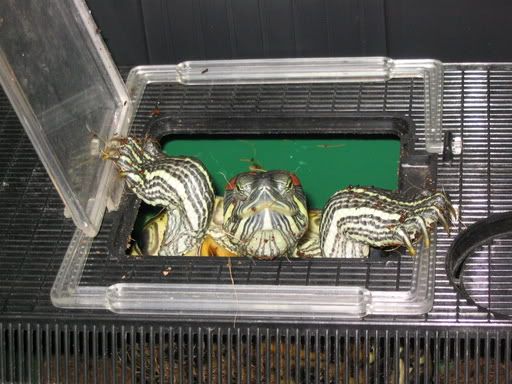
Friday, March 27, 2009

Pet Turtle Care : Box Turtle Care

Pet Turtle Care

Congratulations, you have a new box turtle. But how do you take care of your precious new friend? Taking care of a box turtle can take some work, but there are simple steps to ensure that your box turtle is happy in his new home.

First you must decide housing for the turtle. Will you keep it indoors or outdoors? If you decide to keep the turtle outside, make sure that the area is similar to the turtle’s natural habitat. There should be plenty of sun since box turtles are reptiles, but also shade in case the turtle becomes overheated under the constant heat of the sun. Provide water for your turtle so that it is deep enough for swimming. The home should have weed-like plants and insects for consumption. An outdoor setting is probably the home a turtle would choose. However, an indoor home properly made will keep your box turtle just as happy and safe.

If you build your turtle a home indoors, use a container like those made by Rubbermaid. The best option is to have a large, dark container that the turtle cannot see through. A turtle can become perplexed and frightened looking out of a clear container. One of my box turtles constantly tried to climb through the wall of his clear container, so I had to move him. The container should be large and filled a few inches deep with a substrate such as “Bed-a-Beast.” Then provide a hiding place for the turtle such as a hollow log. You should make a pool for the turtle since that is where a turtle usually poops. I used the plastic lid of a container for food. Make sure that the pool is not too deep. Every day, keep the entire tank moist by spraying the surfaces of the home.

Inside the home of the turtle, keep the temperature fairly warm in the lighted area- about 80 to 85 degrees Fahrenheit. Use UV-B light to keep the turtle healthy and active all day. Another option is to take your turtle outside to soak in the sun for about an hour a day. The natural sunlight is tremendously healthy for your turtle, although he may not enjoy it at first. Just remember, you know what’s best for your turtle. Keep an area away from the light so that the turtle can rest there when he’s had enough light. This is why it is important to have a container that is large enough for two distinct areas.

The food a turtle eats is obviously very important to its health. A person must watch his or her own diet. It is your responsibility, however, to feed your turtle healthy foods. A turtle will eat almost anything, from fruits and vegetables to insects and worms. Another factor you should consider is providing edible materials with high calcium levels such as boiled eggshells or a cuttlebone that you can buy at any pet store. One final hint to feeding your turtle- have fun with it. Be creative in feeding your turtle from day to day because you do not want to create an addiction to one food by feeding it the same thing each day. Keep the turtle’s diet balanced with half plant and half meat.

I have a few final hints below on how to take care of your new box turtle.

1. If your turtle does not eat, try soaking the food in water first. Or, if you are constantly there watching your turtle, he may never come eat the food. Unfortunately, you can easily frighten turtles, so leave your turtle alone to eat peacefully.

2. Change the water in an indoors home every day to keep it clean since that is the most likely place a turtle will defecate. When coaxing a turtle to do this, use warm water to help him.

3. If a turtle burrows deep into the substrate and does not come up for a few days, don’t worry. This is completely natural since turtles enjoy being in tight spaces. However, make sure that your turtle gets enough food.

4. Feed your turtle on a rock because this will help him scratch away extra-long toenails.

Just follow the easy tips above, and you will be an expert caretaker for your new turtle. Do not neglect your turtle since it is helpless without you. Be responsible and enjoy your friendship.

Joshua Park is a college student studying biology. He enjoys sports, comedic movies, and music. To learn more about box turtles or to read other articles this author has written, please visit http://www.true-money.com/ by clicking the link.

Article Source: http://EzineArticles.com/?expert=Joshua_Park

Pet Turtle Care : What Type of Food Do Turtles Eat

Pet Turtle Care

What do turtles eat? It depends on the type of turtles, how old they are and where they are located. Generally, turtles are carnivores when they are young. However, they turn into omnivores or herbivores when they grow up and mature, depending on their type.

To answer the question "What do turtles eat?" we'll start by listing the common types of turtles and what they like to eat:

• While River Cooter turtles feed primarily on plants, Map turtles and Malayan Box turtles eat meat and lots of plants.

• American Box turtles feed on anything it gets.

• Meat forms the principle diet of the Chinese 3-Striped Box turtles.

• The Red-Eared Slider turtles end up being omnivores on maturity after starting off eating bugs and worms when they are young.

• Snapping turtles look for small creatures to eat, while most other turtles simply eat plants.

• Most turtles eat shellfish, insects, water plants or fish.

• To ward off predators, turtles often eat poisonous plants like poisonous rhubarb, ivy and avocado found near their habitat.

• Pond turtles in the US eat from a wide list consisting of insects, arthropods, small shellfish, snails, worms and small fish.

• Poisonous plants should not be in a pet turtle's diet as the owner may not know which plants they were acclimatized to in their natural surroundings.

• What pet turtles should eat is good and healthy food. If you bought the turtle from a pet store, they most likely also sell the food that the turtle eats.

• Aquatic turtles eat aquatic aquarium plants, small live fish, dried shrimp and floating turtle pellets found at the pet store.

• Land turtles eat special pellets made for land turtles. While some eat worms, others eat fruits, vegetables, and meal worms.

• Processed foods with high contents of salt and preservatives run a risk of damaging the turtle's digestive system.

• Milk or dairy products can make them sick and should be totally avoided as their stomachs lack the enzyme for breaking down lactose.

• Turtles sometimes eat fruits such as bananas, grapes, mangoes, blueberries, apples, strawberries and other citrus fruits.

• Turtles can also eat chicken, turkey, cooked fish in small quantities, mealworms, boiled eggs, earthworms, silkworms, shrimps, snails and crickets. Raw meat with too much fat can get contaminated and
should be avoided.

• Domestic turtles eat leafy vegetables like carrot tops, fig leaves, red and green lettuce, corn, green bean and peas, beets, squash, okra and plantain weed.

• Turtles also love to eat flowers like roses, pansies, petunias, borage, geraniums, carnations, hyssop and nasturtium.

• Phosphorus goes with the kind of food preferred by the turtle, but you should take precautions and watch out for the calcium intake and minerals like vitamin D3 in the turtle's diet as they have a direct bearing on its health. Vitamin D3 can be given as a dietary supplement if your turtle is lacking the vitamin. Exposure to sunlight or reptile light also helps in producing it in the turtle's body.

Want to find out about turtle habitat and types of turtles? Get tips from the Turtle Facts website.

Article Source: http://EzineArticles.com/?expert=Peter_J_Lee

Pet Turtle Care : A Truly Unique and Interesting Pet

Pet Turtle Care

Turtles can be great pets and it's a fact that children love turtles as their pets. These animals are very fascinating. And there are several types of them too.

If you decide to take a turtle for your pet, try to learn more about these animals first. They require proper care and a certain level of attention. There are some species that can be taken cared of by humans while there are others can't be taken away from their natural habitats.

Generally speaking, there are two types of turtles that you can take home - the aquatic and the terrestrial types. Terrestrial turtles need a lot of time on land while aquatic turtles need to be in water most of the time. It is important that you know which type of turtle you've got so you can take care of it properly.

For terrestrial turtles, you have to prepare a big tank and some mud. Mud turtles need twelve hours worth of sunlight every day. If you can't take them outside, use a UV lamp instead. Terrestrial turtles also need to be in a place with a temperature of 80 degrees during the day and 70 at night. And while these pets prefer the land, they also need fresh water to drink and swim about.

As for the aquatic turtles, the common species are the painted turtles and the sliders. The sliders want swampy areas. They live near the lakes that have lots of mud. They tend to go out in the sun in broad daylight and then swim during the night to cool off. But then, they still have to spend more time submerged in the water than out in the sun. Between the sliders and the painted turtles, the latter is the specie that is a lot harder to take care of because of the special things it needs.

At this point, you should have decided on the type of turtle you want. The next thing to think about is the size of the tank you'll buy. You normally need a 40 gallon tank - or larger if you want a larger specie or if you want to take care of more than one turtle. The bigger the tank you have, the better your pet can move around in the water and over the land.

Plants are required, but you have to be sure that they're not poisonous. Don't put barks and wood chips in the tank either, as bacteria and molds might form on them. Turtles tend to munch on these things too, although their digestive tract can't handle it. Instead, add some small rocks and mud for the turtle to play on.

As for food, your pet would need berries, lettuce, and some feed sticks. Some species eat goldfish and insects too. You also have to be very particular about the water these pets drink and swim on. Use mineral or spring water instead of tap water in the tank.

The chemicals and chlorine in tap water can be very harmful to your turtle pet. Chlorine and other chemicals in the tap water can cause bacteria in their digestive systems.

PetCareGuide.Org - pet care articles and tips. Read the review of the TurtleGuideBook - turtle pet care guide.

Article Source: http://EzineArticles.com/?expert=Cristian_Stan

Pet Turtle Care : Learn How to Take Care of Turtles Before You Buy Live Turtles For Sale

Pet Turtle Care

Most potential turtle owners are unaware that most pet turtles require a dry as well as a wet habitat, and that the temperature of these should be conducive for the turtle's well-being. A turtle needs a lot of fresh food. Clean, fresh water should be kept in a shallow bowl and should be readily accessible to the turtle. You should have the knowledge to be able to recognize the difference between male and female turtles because of their different care requirements.

Feeding A Proper Diet To Your Pet Turtles -

One needs to be sure that they are feeding their pet turtle the proper turtle food to sustain its life and be healthy. Generally turtles require fresh vegetables such as lettuce to stay healthy. However, there are species of turtles that require a meat based diet too.

Your Baby Turtle Will Not Stay A Baby For Long -

Usually one gets a baby turtle and then is amazed to see of fast the baby turtles turns into an adult. Obviously the food intake of your turtle increases when it becomes an adult but more importantly if you didn't foresee the rapid growth of your turtle and purchased a turtle habitat that is too small be prepared to be set back by $200 to $1000.

Caring For Turtles -

You should also know that turtles require daily care. Another popular myth is that turtles hibernate for months. This is untrue, so making sure that somebody is taking care of your pet turtles if your planning to go out of town. Checking your turtle on a regular and systematic basis to detect any early signs of an illness is also a must.s

If you do eventually decide to keep turtles as pets its important that you stay committed to their care to have a happy, healthy pet turtle. I've prepared the most complete Turtle Care Guide that answers all the questions of any potential or current turtle owner: http://willed.info/turtle-care-ahreview

Article Source: http://EzineArticles.com/?expert=Saif_Shah

Pet Turtle Care : Turtle and Terrapin Care Sheets

Pet Turtle Care

When it comes to the care of your pet turtle or terrapin are you sure you know what you're doing? Or perhaps you've read up on it a little but find you keep forgetting important things, like changing its water every three days or so?

Turtles actually need a pretty well thought-out environment to live happily in, as well as a lot more care and attention than people realize.

Probably one of the best ways to keep reminding yourself of how to care for your pet is to pin a 'care sheet' somewhere really obvious, like above the turtle's tank for instance.

This care sheet can be one you print out from a good website or one you create yourself using information from different sources. In any case, the more research you do, the better.

One of the most important aspects to turtle care is, obviously enough, what you feed them. What are less obvious are the subtle differences between turtle types in terms of what to feed them and at what age. A general rule of thumb is if it's a baby turtle you feed it meat (cooked or fat-free) and as it gets older you start adding more and more leafy greens to its diet. Older turtles will be almost entirely herbivorous but a balanced diet is still essential.

But does a slider eat the same thing as a painted turtle? And what precisely does a terrapin eat? (A terrapin, by the way, is usually just the term used for pet turtle in the United Kingdom so you need to figure out what kind of 'terrapin' you have before finding the right care sheet for it.)

Further, what on earth is the right environment for a box turtle? (Also known as a tortoise, the box turtle is a fully terrestrial reptile so do not put it in water, it will drown. And die.)

Then again, you've got details like nutrition supplements and ambient temperature to think about. There are mineral and vitamin supplements you can add to your turtle's diet about once a week or so but how much is right for your pet?

What kind of turtle needs what kind of supplement? It is generally advisable to put a calcium block in the turtle's dry habitat for them to snack on occasionally. That helps to ensure good shell health, as do daily doses of unfiltered, natural sunlight.

In any case, a turtle care sheet that you create and keep updating regularly as you learn more about your turtle can make all the difference. If you are away on a trip, for instance, or your turtle out-lives you (some grow to be a hundred years old!), then the care sheet will ensure that your pet continues to be cared for in the best possible way.

Liked this article? Read more at: Turtle and Terrapin Care Sheets


Pet Turtle Care : Common Pet Turtles

Pet Turtle Care

When it comes to pet turtles it may seem they are all pretty much the same thing. In fact, turtles are quite differentiated and each breed and type of pet turtle has its own unique features, habits and requirements. Some of the most distinctive differences across types are the colors and markings on their shells.

Land based turtles have different kinds of shells than do sea turtles or water based turtles like terrapins. Water based turtles tend to have lighter color shells, less distinctive markings and softer shells as well than the land based turtles.

The most popular pet turtles include the box turtle and the slider turtle varieties. The most common breeds of turtles, such as the yellow bellied turtles, slider turtles, mud turtles and box turtles, all have distinctive colorings and markings and an average life expectancy of about fifty years.

Some have a little bit less or more, but a fair number have been known to outlive their owners. This is, therefore, something to be considered when looking for a turtle pet. You have to be willing to commit to providing for your pet turtle for a long time.

Box turtles are one of the most common types of turtles and are commonly known for their dome shaped shells. They can live on a diet of fresh vegetables like fresh leafy greens but also enjoy other foods like snails, insects, fungi, berries, slugs, roots, worms and flowers.

During certain times of the season males will contend for the affections of a single female so if you're planning to own more than one pet turtle of differing genders you will have to think about that.

Mud turtles are a common breed of aquatic turtles and there are certain species of mud turtles that are normally kept as household pets. These require, similarly to the red-eared slider and the painted turtle, both a wet environment and dry environment to live in.

Other common types of pet turtles include the yellow bellied turtles which also have a long life expectancy and thrive on fresh leafy greens as a major part of their diet.

Regardless of what kind of turtle you get as a pet, you will need to provide for fresh food and water as well a comfortable, climate-controlled environment for them.

Liked this article? Read more at: Common Pet Turtles


Pet Turtle Care : How to Create Pet Turtle Habitats at Home

Pet Turtle Care

Turtles are just like any other pet animal; they will warrant a certain degree of commitment for an individual to be able to effectively take care of them. And just like other pets, it's important to set up proper pet turtle habitats before you go about acquiring your first turtles to take care of. Designing a place for your turtles to live in is not as simple as you may think it is. For the most part, you will need to create a space that is pretty much like the natural pet turtle habitats that the reptile thrives in.

Species differences Before you go about designing and setting up your pet turtle habitats, it's important to note that different species will require different environments. For instance, there are certain turtles that can live in fresh water and there are those that require some sort of muddy environment. Pet turtle habitats tend to vary and the idea is to consider specific space requirements as well as the area of your home that you have allotted for your pet.

For some enthusiasts, it's better to run a research first on your options and consider your own living space before acquiring a specific type of turtle. It's better if you get a pet that will easily adjust with the type of home that you have. For instance, if you don't have a lot of backyard space, you will logically have to set up pet turtle habitats indoors. This will mean getting turtles that will do just fine without much sunlight. Accessories While the best place to keep pet turtle habitats is still outdoors where they can get enough warmth from the sun and conveniently hibernate during the winter season, some people opt to keep their pets indoors for a lot of reasons. This is perfectly fine so long as you make sure that the pet turtle habitats come equipped with such accessories as UV lamps that can provide the same heat that the sun offers.

Since turtles normally live on both land and water, it's important that the tank of your pet turtle habitats come with a dry space where your pets can easily take a break from being in the water for too long. You will also need to install filters that should be regularly cleaned to keep your pets from developing fungus on their shells which can be difficult to treat. A slanted design for the tank is common among pet turtle habitats and you can easily buy these enclosures in specialized pet stores. Alternatively, you can also have the tank custom-made although this will probably cost more. Serious turtle lovers usually have pet turtle habitats specifically designed to suit their needs. For beginners, you can probably start with a smaller tank and work your way up as you go along. Keeping it natural You will want to keep your pet turtle habitats as natural-looking as possible so that it doesn't take much for your pet to adjust to the new home.

For great turtle care advice, turtle food recommendation or turtle health issues visit us at... http://www.petturtlecare.net/

Article Source: http://EzineArticles.com/?expert=Steven_Magill